

The Book:
The Rose of Martinique: A Life of Napoleon’s Josephine
By Andrea Stuart
Grove Press
2005
The Talk:
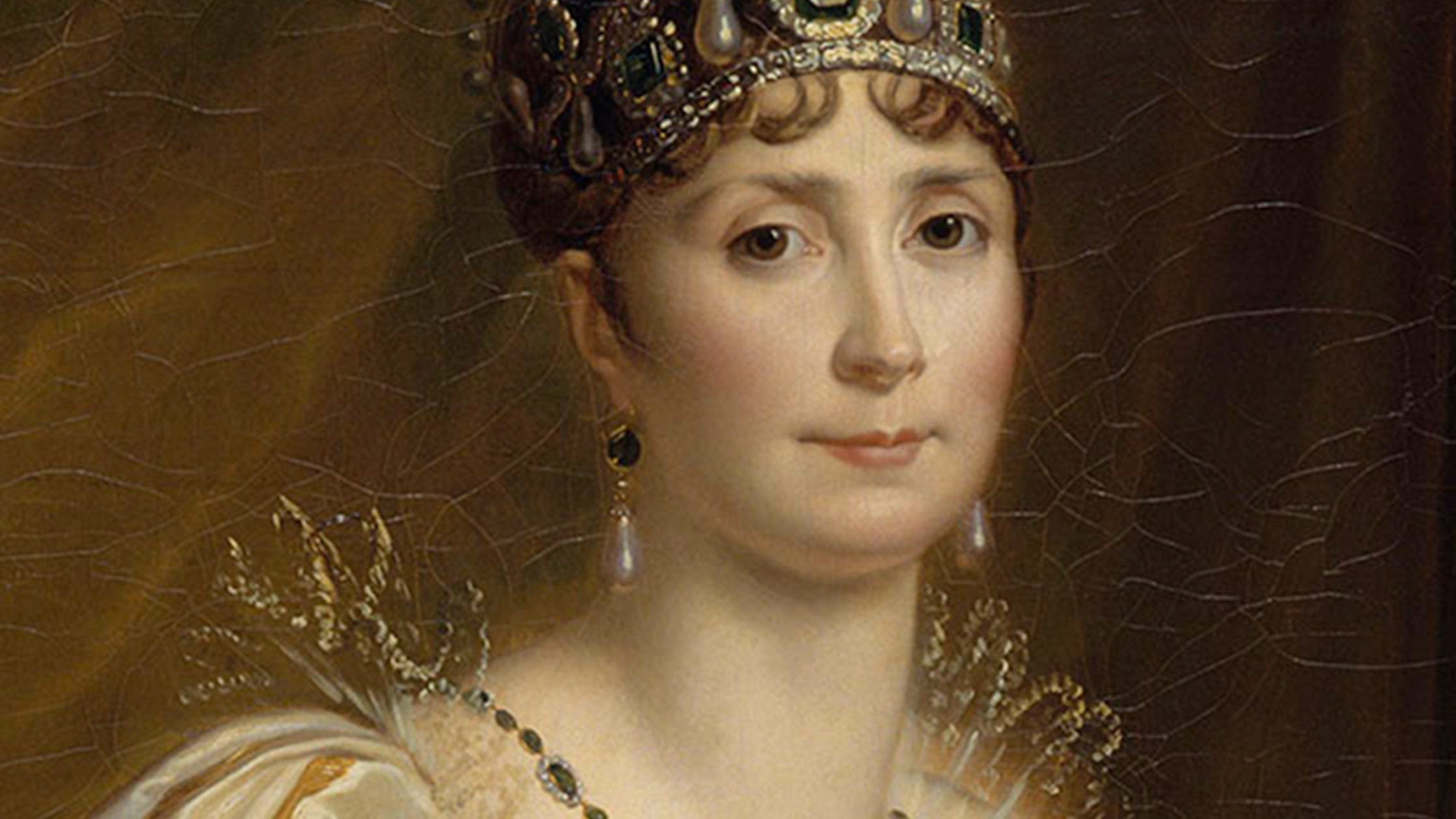
In her 2005 biography The Rose of Martinique, writer and historian Andrea Stuart tells the story of Josephine Bonaparte, from her childhood on a sugar plantation in the Caribbean to her final days of semi-exile as the ex-wife of Emperor Napoleon.
Josephine’s reputation is complicated. During and after her lifetime, she was both venerated and vilified. She was beloved by the French public for her style and grace, while her enemies (namely the English) portrayed her as an immoral, promiscuous seductress.
Even modern books on Napoleon that look skeptically at the worst accounts are still prone to place her in the background: Napoleon is active on the world stage, while Josephine has little of importance to do while her husband conquers nations.
Ridley Scott’s 2023 epic Napoleon brings Josephine closer to the center. If viewers of film walk away with anything, it’s that Josephine was the great obsession of his life. And yet, even so, Josephine, played by Vanessa Kirby, spends most of the movie in big empty rooms by herself, staring despondently into the void, traumatized and disassociated from the world around her. Only in brief moments, like trying on a hat or flirting with Napoleon, played by Joaquin Phoenix, does she laugh or smile. Otherwise, she is mainly sad burnt-out woman sitting by window, waiting for her man to return.
This is not who Josephine was. Not by a long shot. Scott does get some things right about Josephine and Napoleon’s relationship. (The goofy and ribald scenes are probably the most accurate parts, based on Stuart’s account.) But after reading Stuart’s biography and rewatching the Director’s Cut of Napoleon, I feel like anyone who lived in France during her lifetime would be confused by Josephine’s portrayal in this film.
1. Josephine was creole.
As the title of Stuart’s biography suggests, one of the running threads in the book is the way Josephine’s Caribbean roots shaped her identity throughout her life.
Josephine (who went by Rose before Napoleon) was born the daughter of a French plantation owner in 1763 and spent her childhood, up to age fifteen, on the Caribbean island of Martinique. Today “creole” typically refers to someone who is mixed race, but at the time “creole” referred to the generational white planation owners of the Americas (though plantation families could also have black ancestors within their family tree). In France, creoles were considered lower class nobles and excitingly exotic.
Josephine herself was known for walking in a particularly creole kind of way, as if “floating across sand.” She had a thick Caribbean accent when she first arrived in Paris with her half-sister and slave Euphémie. One of her ladies in waiting remembered Josephine’s “complexion was rather dark but with the help of skilfully applied rouge and powder she remedied that defect.”
Her distinctive style, a plain white muslin dress, was similar to the dresses worn by women in Martinique. She also popularized the wearing of headkerchiefs “à la Creole." Josephine’s creole-ness was considered a big part of her allure and charm. Stuart writes:
Rose was in many ways an exemplary Creole, ‘vivacious, pleasure-loving, sensual and wilful,’ and it is almost impossible to imagine her emerging from any other society.
During the French Revolution, when Josephine was in danger as a member of the nobility, she referred to herself as an “American”—a term that referred to anyone from the Americas, but which had the connotation of the liberty-loving American Revolution, which was in vogue.
Later in life, Josephine had perfume shipped from Martinique because Napoleon preferred her island scent over French musk. She often told the story from her childhood in Martinique when she had her fortune told by an obeah woman who predicted that she would one day be “greater than a queen.” And on the first night of Napoleon’s consulship, he carried her into the bedroom saying, “Come on, little Creole, get into the bed of your masters.”
In enemy propaganda cartoons, Josephine would be portrayed as a sexually loose “native,” dancing wildly in the nude. When she became wealthy enough, she amassed a garden of exotic plants, starting with flowers from Martinique. Near the end of her life, guests at her Malmaison estate would be treated to bananas and pineapples from her world-famous greenhouse. Her grandchildren recalled how she taught them to suck the sweetness from the sugar cane she grew there.
Napoleon includes numerous reminders of France’s colonial and slave-based prosperity. The massive Thomas-Alexandre Dumas plays a supporting role throughout the film. The smoking of tobacco cigars is ubiquitous. Josephine has a mulatto servant who welcomes visitors with a heavy Caribbean accent (named Lucille in the credits, played by Riana Duce). But Josephine’s colonial identity is not mentioned, except when her marriage certificate cites Martinique has her place of birth.
2. Josephine was bigger than Napoleon when they married.
In the movie, when Napoleon and Josephine meet, Josephine is portrayed as a wreck, with nothing to offer him but her body. Josephine desperately needs someone with Napoleon’s stature and income to survive. She wonders if he will lose interest in her because she’s essentially a ruined woman.
This is the opposite of Stuart’s telling. When Napoleon met her, Josephine was considered one of the most beautiful of the merveilleuses, the marvelous ones of Parisian fashion. She was known as one of the “Three Graces,” the three most stylish women in the city.
Despite the terrible vicissitudes of her life, Rose had transformed herself into not merely a fashionable woman, but a fashion celebrity. She was one of the It Girls of her day. And every alteration of her toilette was noted by the style-conscious all over the metropolis.
She was well connected among the post-revolutionary political elite. Napoleon, in contrast, was a promising but mostly unproven military leader. As a Corsican, he was very much an outsider to the Parisian social circles and status games Josephine had mastered. A friend described him as “badly dressed and a bit grubby.” He mentioned that Napoleon’s smile “was false and he often grinned at the wrong time” and that he was “given to inappropriate outbursts of laughter which did little to endear him to others.” Stuart writes of Josephine:
She would have represented everything he wanted to be and everything he wanted to have.
Even after Napoleon’s first Italian campaign, when he returned to Paris a national hero, Josephine’s star still outshone Napoleon’s. It was several years into their marriage until Napoleon had the fame, social status, and political influence equal to Josephine.
However absurd it may seem in retrospect, it was still being said during these years that 'It is his wife’s influence that upholds him,’ according to the duchesse d’Abrantès.
3. Josephine was surrounded by a lively circle of servants, friends, and family.
As I mentioned at the start, in much of Ridley Scott’s film Josephine is alone at home. The reality would’ve been quite different. When Josephine was divorced from her first husband, she lived in a convent with other divorced Parisian women who helped her get back on her feet. In prison during the Terror, she had close friends and a lover. Whenever she lived as an unmarried woman, she lived with close lifelong female friends.
As Empress, Josephine had twenty ladies in waiting. By all accounts, she was friendly with them and enjoyed helping them out in their careers and love lives. She carried on extensive correspondence with her extended family, her adult children, etc. She was also known by everyone around her as a consummate conversationalist, remarkably kind, even-tempered, and forgiving.
Much of her time was spent hosting visitors, attending operas, plays, concerts, putting on balls and dinners, cultivating the “vibe” of her salon, meeting with architects, gardeners, artists, businessmen, investors, and merchants.
It’s true that as Napoleon ascended in power, Josephine felt increasingly restricted by the rules and decorum that encroached upon her life. But it was the formality that bothered her, not people. After Napoleon divorced her, she eventually returned to a busy social life, welcoming international visitors to her estate, hosting parties, and helping out strangers who appealed to her for assistance.
4. Josephine was Napoleon’s most effective diplomat and travelled constantly.
In Napoleon Josephine has nothing to do politically; her main purpose is to bear a son. This she can’t do1. And so, all the characters in the movie seem to suggest, what else could she be good for?
The answer is: A lot. During Napoleon’s rise to power there were French émigrés across Europe who fled during the revolution. Many were royalists, and their plotting for a royalist takeback was a serious threat. Working side by side with Napoleon, Josephine—a noble from the old days herself—won over many of these people, gained their confidence, and reported on them to Napoleon.
During Napoleon’s five-year consulship, Josephine spent only twelve months in Paris. She brought her whole entourage with her. She attended social gatherings, met with an endless stream of visitors, and built goodwill among the people. She would meet with secretaries to memorize the names and personal details of event attendees.
People were astonished that she was so well informed about everything; they were flattered by her knowledge of them and went away charmed.
She was also deployed at various times to win over critical leaders when nothing else seemed to work. In short, she was fully integrated into the entire political and geopolitical Napoleonic agenda. One factor that surely played into Napoleon’s reticence to divorce Josephine was how valuable she was as a power player on his team. Napoleon once remarked, “I win battles, but Josephine wins hearts.”
5. Josephine was the ultimate connoisseur of animals, plants, art, clothing, and makeup.
Lastly, the most important thing Scott left out of his biopic was the orangutan.
Josephine even acquired a female orang-utan, which sometimes joined guests at table, beautifully dressed in a white cotton chemise, munching delicately at her favorite food: turnips.
Josephine was an obsessive collector of animals. Roaming in “semi-liberty” at Malmaison were kangaroos from Australia, antelopes from Africa, llamas from South America, and more. (She famously owned black swans, which were a rarity at the time.) Inside the house were rabbits, monkeys, and dogs. The waiting room was filled with “parakeets and cockatoos, one of which cried incessantly the one word ‘Bonaparte.’”
In addition, Josephine was obsessed with plants. Her rose cultivation was world renowned and is one reason roses can be found in Parisian public parks today. As mentioned earlier, she also collected and grew exotic flowers in her greenhouse. Her partnership with the botanical artist Pierre-Joseph Redouté publicized her collection to the world.
Animals and plants were only two of her passions. She collected art and developed the careers of many artists, including female artists, of her time. She popularized shawl wearing, which came to France from Egypt after Napoleon’s campaign there. She discovered the benefits of glycerin for skin care, which is used in many makeup products today.
Of course, all this was possible because of her enormous power and wealth. But the point is that far from spending her days isolated and bored at home with little to do, Josephine’s days were full of people, activity, color, beauty, learning, and discovery. Malmaison, where she invested enormous personal energy and ended her days, was no gray, dreary place but bursting with life. Stuart writes:
Today we can enter the chateau and wander through the grounds where Josephine and Napoleon walked 200 years ago. Only a few of the enormous variety of plants that once flourished there still remain, but the charm and beauty of the place still lingers; and Josephine’s spirit is everywhere.
Related:
The Jack Aubrey guide to management
Is Allende’s Zorro the hero we need?
7 interesting facts about knights
Stuart speculates that the trauma Josephine experienced during the revolution may have caused Josephine to reach menopause early. This was common among survivors of the Terror.